
Guide · Chickens
Hardware cloth vs. chicken wire: predator-proofing a coop
Why chicken wire keeps hens in but not predators out, what mesh size to use where, and how to stop diggers, climbers and reachers, drawn from Extension guidance.
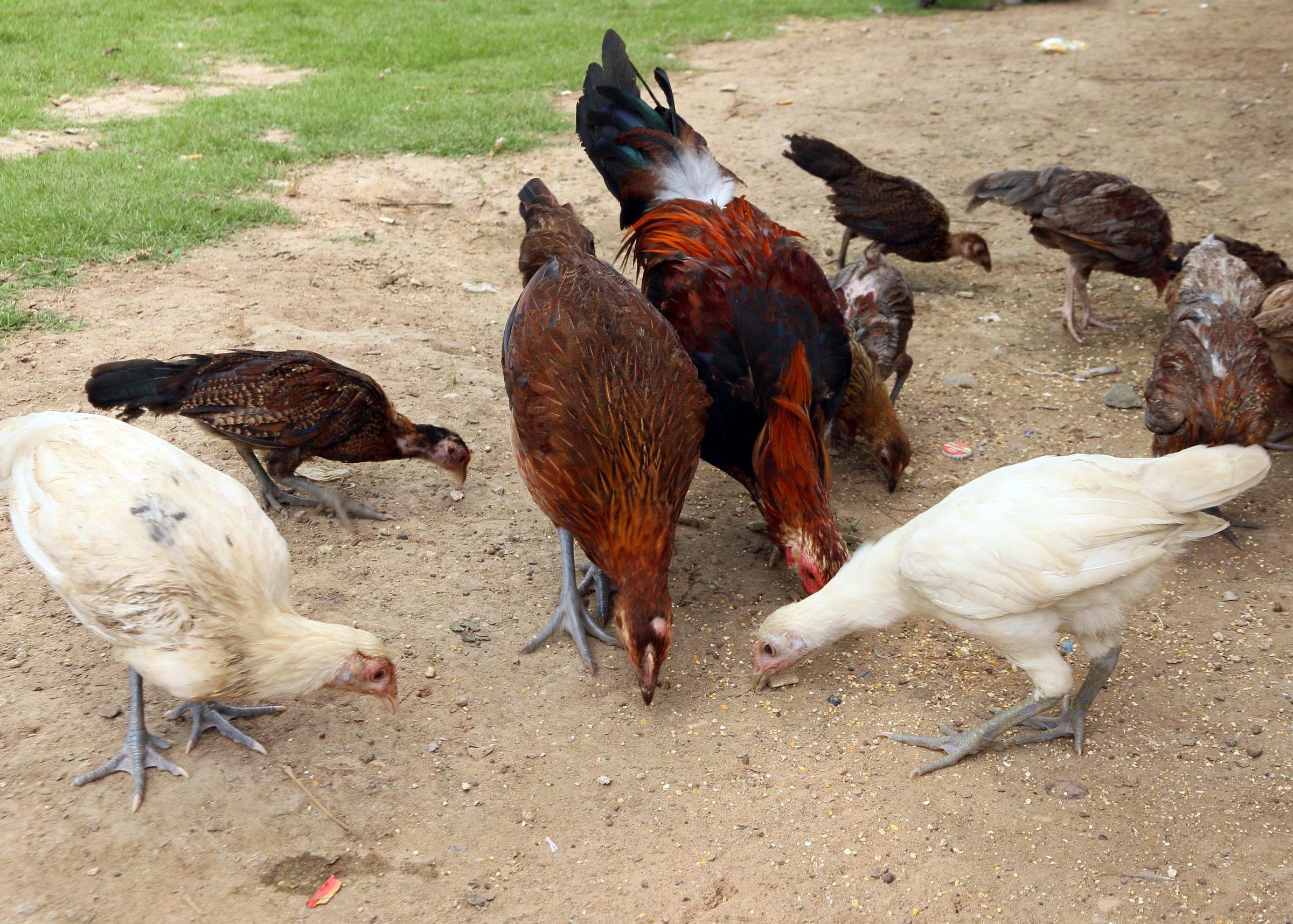
Photo: Øyvind Holmstad, CC BY-SA 4.0

A researched guide. We haven’t put this to the test with our own flock yet; everything below comes from the Extension and hatchery sources listed at the end. Your local predators, soil and climate matter, so check with your county Extension office too.
Most people who lose birds to a predator lose them at night, inside an enclosure they thought was safe. The most common weak point is the wire itself. Chicken wire is cheap, light and easy to work with, and it does exactly what its name says: it keeps chickens in. It was never designed to keep a raccoon, a dog or a weasel out.
Here’s how the two materials differ, where each one belongs, and the other gaps a predator-proof coop has to close.
What each material actually is
Chicken wire (also sold as poultry netting) is thin wire twisted into a hexagon pattern, usually with openings around an inch across. It’s flexible, which makes it easy to wrap around a frame, and that same flexibility is why it fails. Cornell Cooperative Extension notes that a fox, raccoon or coyote can easily rip through poultry netting, and that predators have all night, without interruption, to work at an enclosure.
Hardware cloth is welded wire mesh, usually galvanized, with small square openings, most commonly 1/2 inch or 1/4 inch. Because each crossing is welded rather than twisted, it holds its shape when something pulls on it. It’s heavier, stiffer and costs more per foot, and it’s the material Extension and hatchery guidance points to wherever a predator might test the wall.
Why opening size matters as much as strength
A strong wire with a big hole still lets small predators walk right in. The small and backyard poultry resource from Cooperative Extension (poultry.extension.org) notes that the least weasel can squeeze through a hole as small as 1/4 inch across, so it can usually get through chicken wire. Cornell’s guidance is that any wire used to build a poultry enclosure should be hardware cloth with no more than a one-inch-square opening, and that any hole or crack larger than an inch can let a weasel in.
Size also matters for reaching. A raccoon doesn’t always need to get inside. Through a wide mesh it can reach a bird roosting against the wall. Smaller openings keep paws and talons out as well as bodies.
A practical way to think about it:
- 1/2-inch hardware cloth is the common all-round choice for coop windows, vents and run walls.
- 1/4-inch hardware cloth is the safer choice for low walls, vents near the ground and anywhere snakes, rats or members of the weasel family are a known problem. Meyer Hatchery recommends 1/4-inch mesh to keep out snakes and stop predators from reaching through.
- Chicken wire still has honest uses: a daytime garden fence to keep hens out of the beds, a temporary divider inside a secure building, or a top cover against hawks on a run that is otherwise solid. It just shouldn’t be the only thing between your birds and the night.
Close the gaps predators actually use
Good mesh on the walls only helps if the rest of the coop is just as tight. Predators come from below, through gaps, through doors and from above.
From below: stop the diggers
Foxes, dogs and other diggers start at the base of a wall. Extension’s small-scale poultry housing guidance says to bury wire along the fence border at least 12 inches deep and to bend the bottom outward about 6 inches, so an animal digging at the base runs into more wire and gives up. The predator management article gives the same 12-inch figure for hardware cloth around a run.
If trenching isn’t practical, a flat “apron” is the common alternative: a strip of hardware cloth laid on the ground around the outside of the run and pinned down. Meyer Hatchery suggests extending it 18 to 24 inches out from the wall. Diggers start right at the wall, hit the wire and stop. Cornell also recommends enclosures with solid or hardware cloth bottoms, since coops that sit on bare dirt or gravel are the easiest to get into.
Through gaps: seal every seam
Walk the coop slowly and look where the roof meets the walls, around doors and windows, at vents and where boards have shrunk. Cornell’s advice is to seal any hole larger than an inch with concrete, wood or hardware cloth.
How the mesh is fastened matters too. Staples can work loose over time. Meyer Hatchery recommends screws with large fender washers for long-term protection, which clamp the mesh across a wider area so it can’t be pulled free.
Through doors: use latches a raccoon can’t open
Raccoons are good with their hands. A simple hook or a turn-button latch may not stop them. Meyer Hatchery recommends multi-step or locking latches on doors and windows. If you use an automatic coop door, check that it closes fully and on time.
From above: cover the run
Hawks and owls hunt from the air. Extension recommends covering outdoor runs with mesh wire or netting. This is one place where lighter netting can be enough, as long as the walls below it are solid.
Habits that do as much as hardware
Even a well-built coop works best with a few routines, all from the Extension guidance:
- Lock birds in at night. Have the flock roost inside a secured building and close and lock every door. If the run isn’t predator-proof, lock up before dark.
- Keep it clean. Don’t leave feed or scraps in the run overnight, and collect eggs daily. Both draw in rodents and the predators that follow them.
- Add a hot wire if pressure is high. Extension describes an electric strand about 4 inches off the ground and about a foot outside the main fence as an extra deterrent for diggers and climbers.
- Mind wild birds. Covering windows with heavy-gauge mesh or screening helps keep out wild birds as well as predators, and wild birds can carry disease.
A simple way to decide
When you’re standing in the aisle with a roll of each, ask one question about every spot on the coop: would it matter if something pulled hard on this at 2 a.m.? If yes, use hardware cloth, fastened with screws and washers, with the bottom edge buried or aproned. If no, as with a garden fence, an indoor divider or a hawk cover over a solid run, chicken wire may be fine.
Hardware cloth costs more up front. But it’s usually cheaper than rebuilding a flock, and it lasts for years once it’s on.
Where to look next
Our Fencing & Predator Protection shelf keeps a researched shortlist of electric netting, energizers and predator kits, and the Chickens shelf covers coops and coop doors. Nothing there is linked yet. Each pick earns a link only once we’ve used it or finished researching it.
Sources
- Cooperative Extension, Small and Backyard Poultry: Predator management for small and backyard poultry flocks
- Cooperative Extension, Small and Backyard Poultry: Small-scale poultry housing: overview
- Cornell Cooperative Extension, Southwest New York Dairy, Livestock & Field Crops Program: Managing predation in poultry flocks
- Meyer Hatchery: Predator proofing your coop and run